

SEO Study Notes - Ahrefs Course (1): How Search Engines Work
It has been over half a year since I joined GeiFei’s community, and I still haven’t properly studied SEO. This time I’m learning by doing, starting with the fundamentals.
Why Should You Care About How Search Engines Work?
The higher you rank on Google, the more organic traffic your website receives.
How Does Google Build Its Search Index?
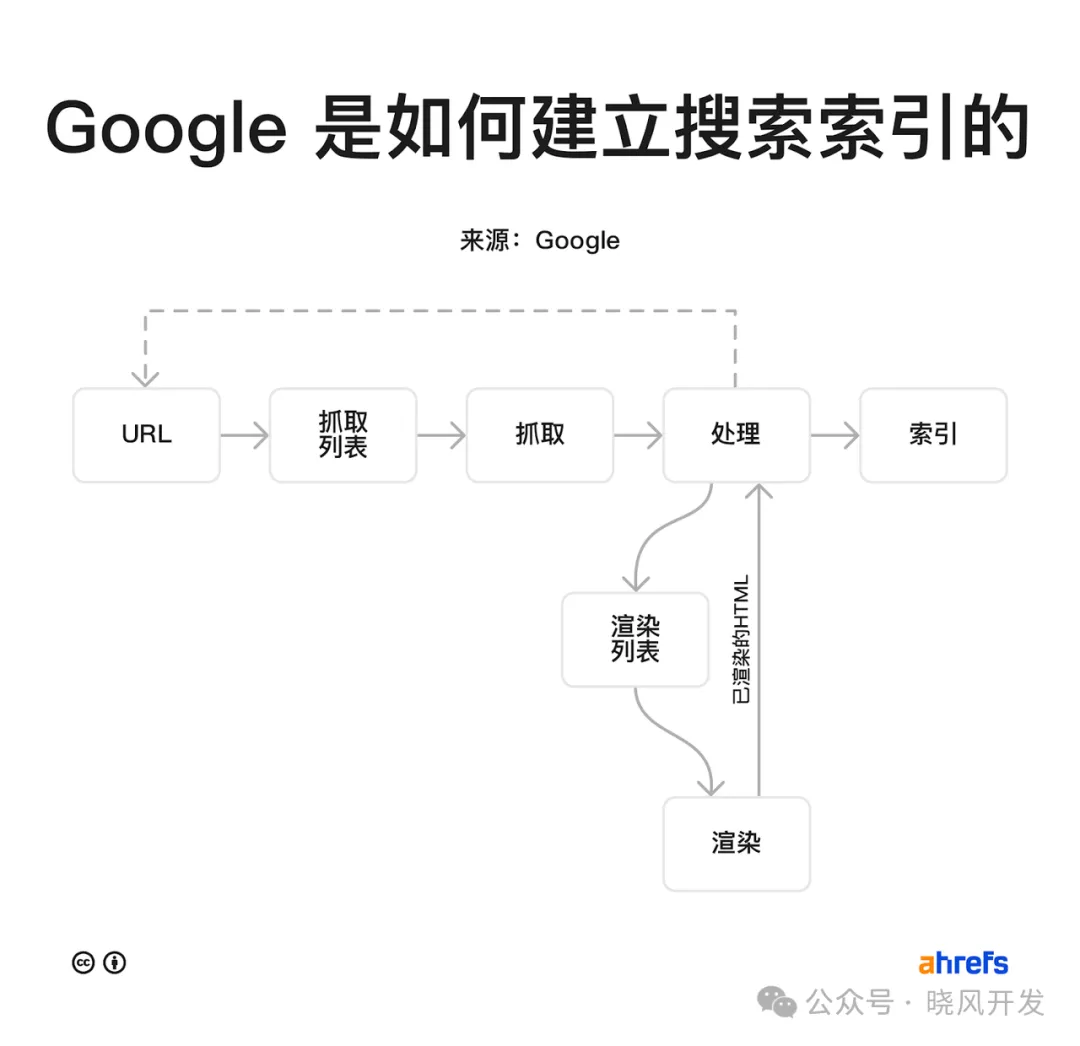
Step 1: URLs
Google discovers URLs in three main ways:
- Through backlinks: You can use the free Site Explorer tool in Ahrefs Webmaster Tools to check your website’s backlinks.
- From sitemaps: A sitemap lists all the important pages on your website.
Step 2: Crawling
Google prioritizes which URLs to crawl based on several factors, including:
- The URL’s PageRank
- How frequently the URL changes
- Whether it is new
Step 3: Processing
Google must render a page to fully process it. Google runs the page’s code to understand how its appearance affects the user experience.
Step 4: Indexing
Indexing is the process of adding information from crawled pages into a large database called the search index. If a web page is not in the search index, search engine users will not be able to find it.
How Search Engines Rank Web Pages
Backlinks
- Link authority: Backlinks from high-authority pages typically have the greatest impact on rankings.
- Link relevance: Links from related websites and pages tend to be the most valuable.
Relevance
Google uses the relationships between entities to better understand the relevance of a page.
Freshness
Freshness is a query-dependent ranking factor, meaning it has a greater impact on some search results than others.
Topical Authority
Google wants to rank content from websites that have demonstrated authority on a given topic.
Page Speed
You can check the speed of any web page using PageSpeed Insights, which also provides optimization recommendations.
Mobile Friendliness
You can check any web page for mobile-friendliness issues using Google’s Mobile-Friendly Test tool or the Mobile Usability report in Google Search Console.
How Search Engines Personalize Results
Location
Your location has a significant impact on local search results — so much so that searching for the same term from two different locations can yield almost entirely different results.
Language
If you have web pages in multiple languages, Google may not be aware of this unless you tell it. You can do this using an HTML attribute called hreflang.
Search History
Google uses your search history to personalize search results.
Original article: https://ahrefs.com/blog/zh/how-do-search-engines-work/