

What a 15-Year-Old Site Taught Me About SEO: Why Calendar Pages Must Be Built 2 Years Early
Today I reviewed a case shared by GeFei, and it’s one of the clearest long-term SEO playbooks I’ve seen.
The site is calendar-12.com:
- Launched in 2011
- Still alive after ~15 years
- Around 1.32M monthly visits, mostly from search
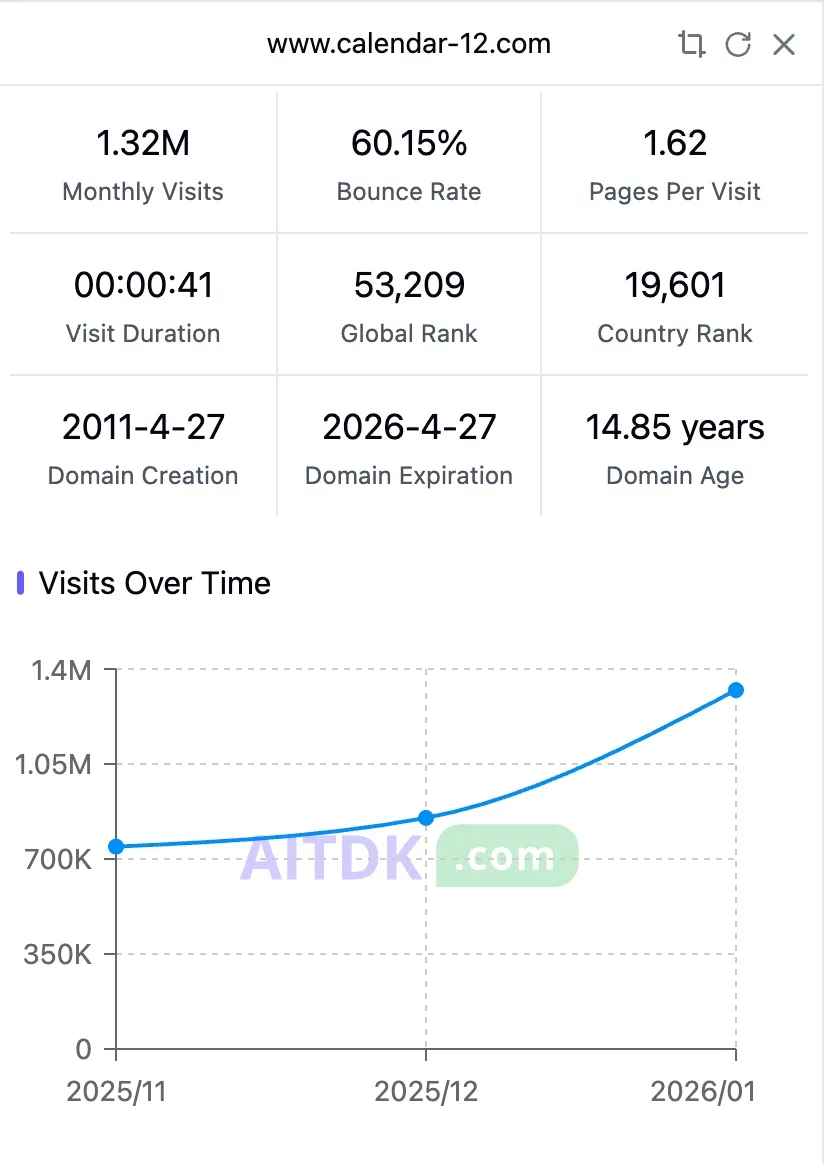
1) What traffic does this site capture?
Mainly predictable yearly keyword clusters, for example in 2026:
2026 calendar printablecalendar 20262026 calendarprintable calendar 20262026 printable calendar
These terms are powerful because:
- demand repeats every year,
- demand starts growing before the target year arrives.
2) Homepage strategy: dynamic year, not static copy
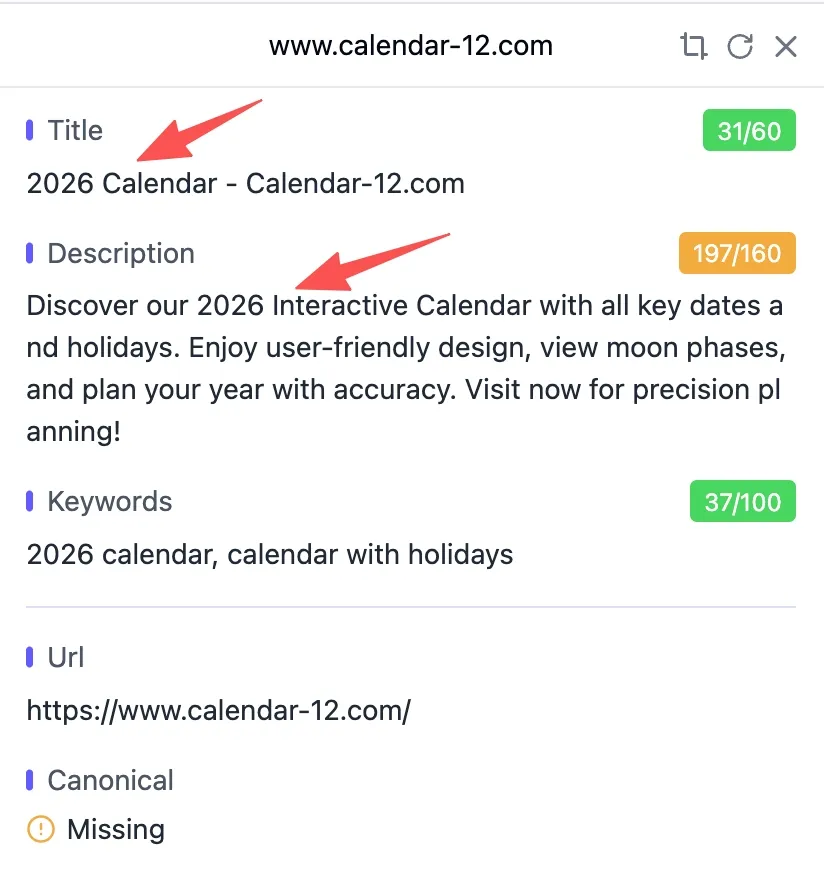
A natural question: if the title is “2026” now, was it “2025” last year?
Current homepage metadata uses 2026:
Archive.org snapshots show 2025 on 2025-12-13:
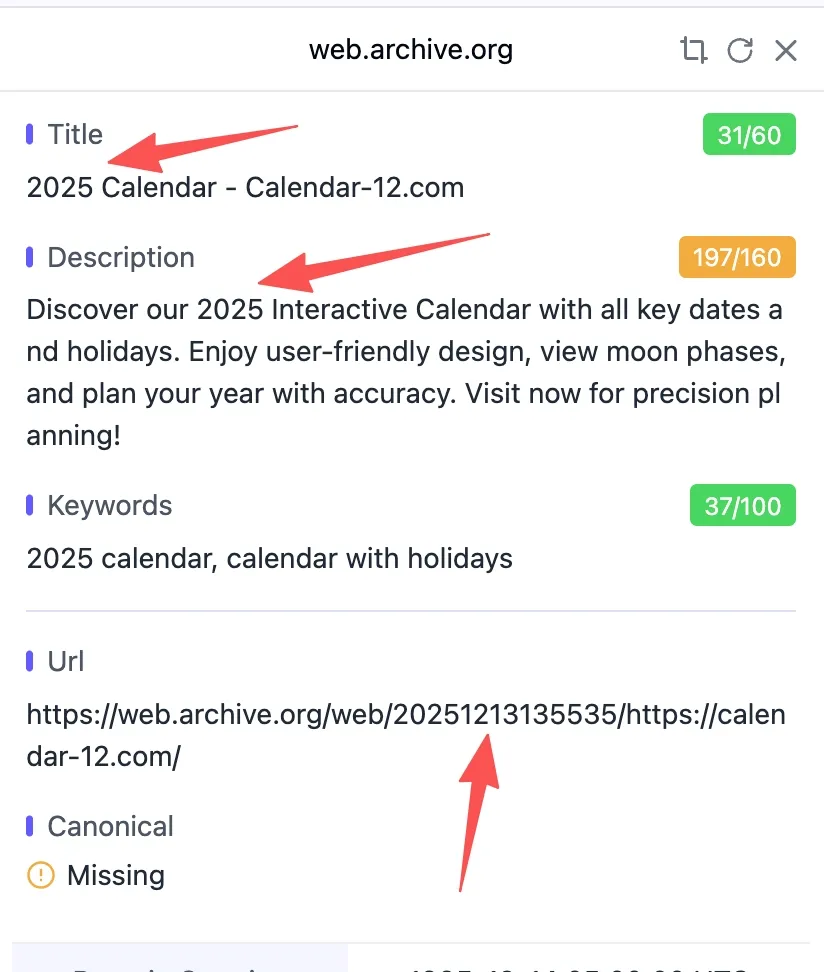
So the homepage year is dynamically updated by code.
This keeps the homepage aligned with current-year intent.
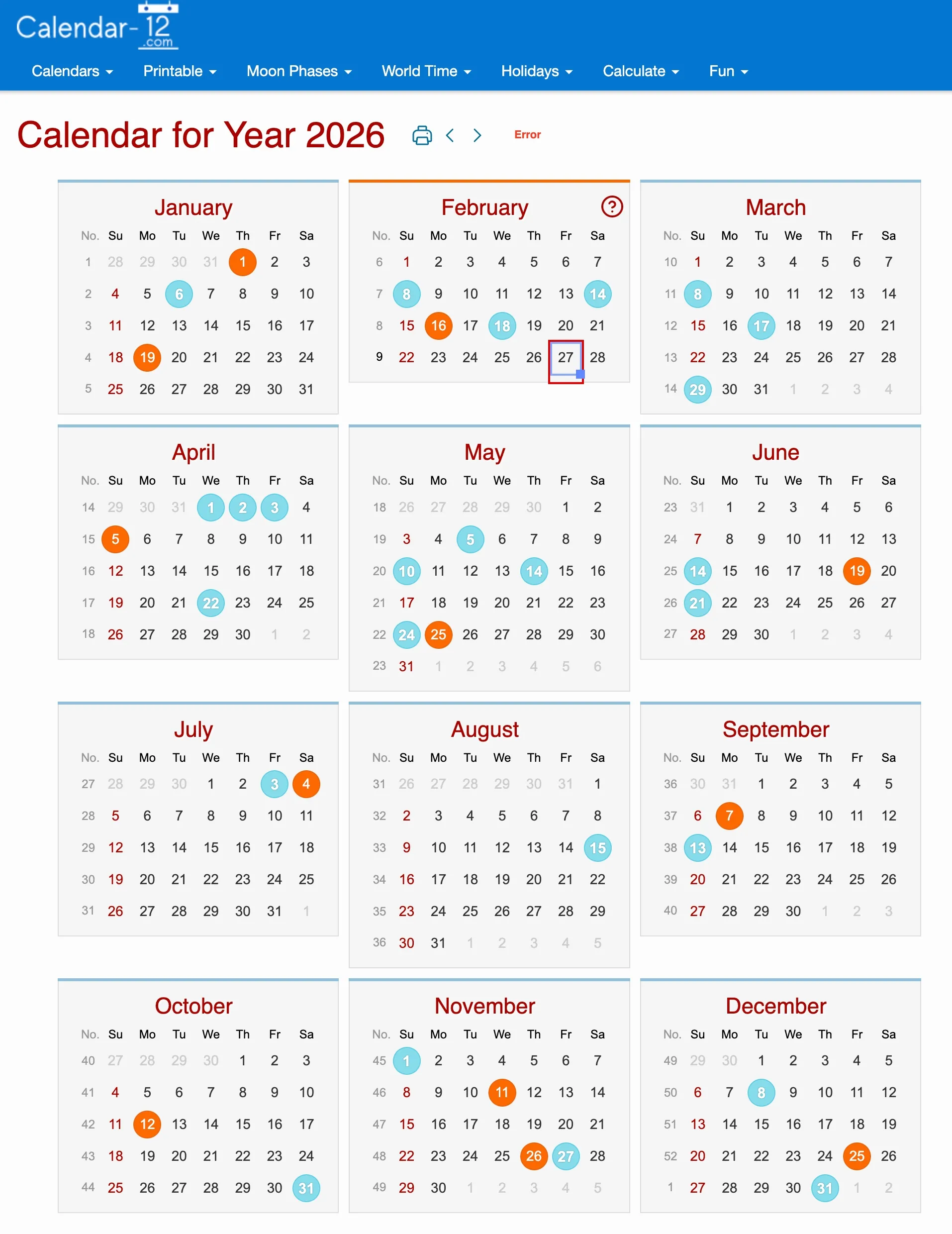
And the first screen instantly shows the current year calendar:
3) The real moat: yearly landing page matrix
This site is not “homepage-only SEO.” It builds dedicated pages for each year.
You can see future-year entries in navigation:
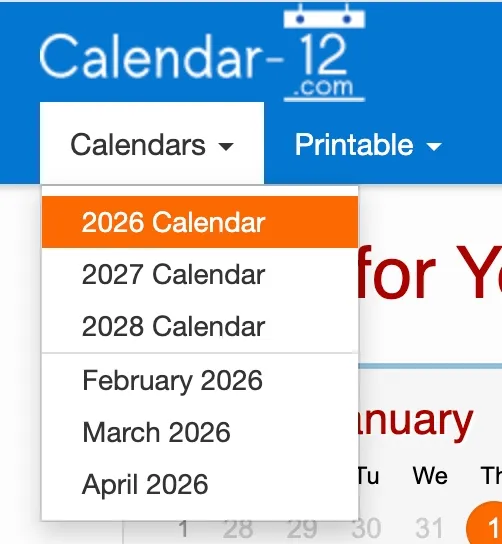
SERP behavior confirms this:
-
2026 calendar printable→ 2026 landing page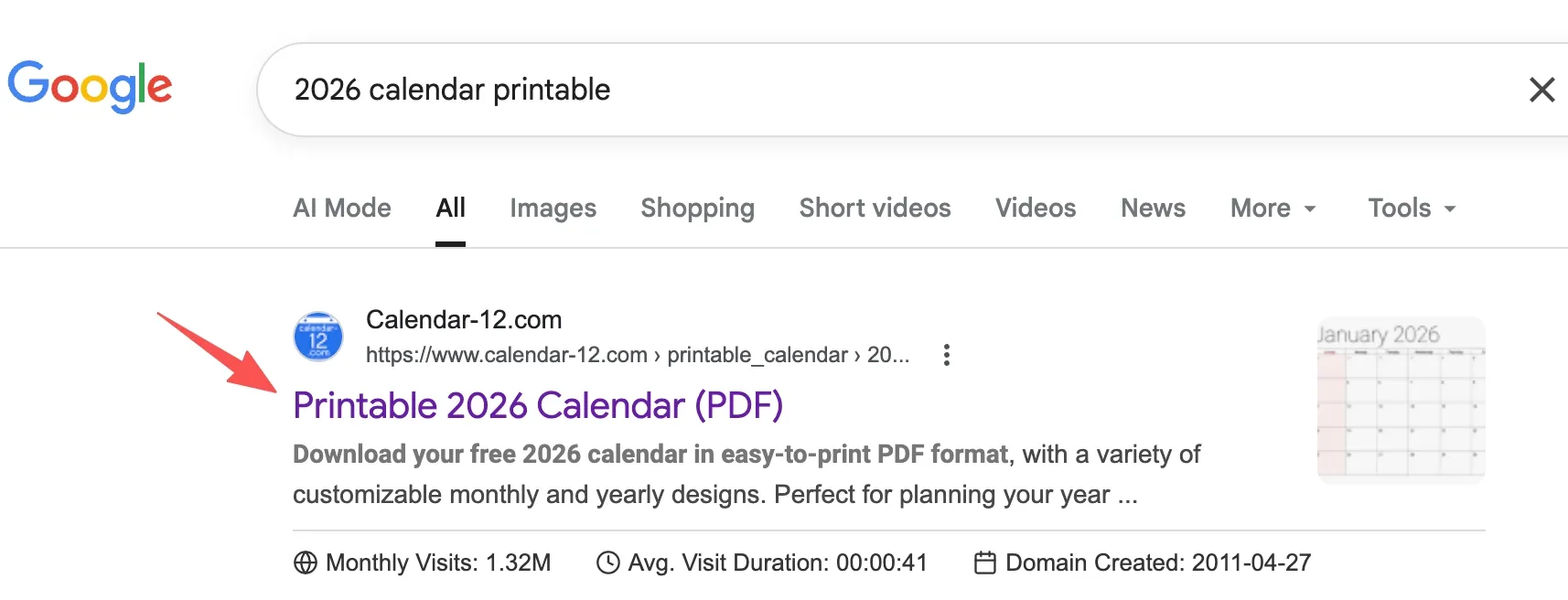
-
2025 calendar printable→ 2025 landing page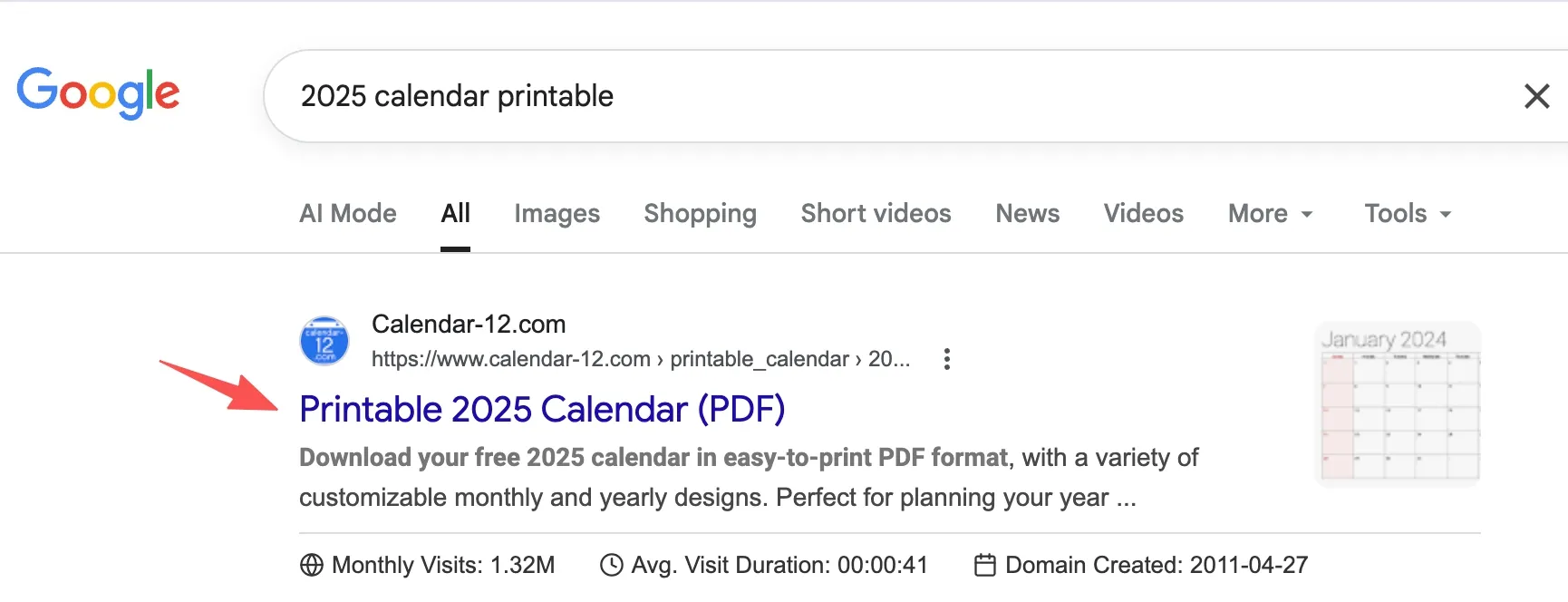
-
2027 calendar printable→ 2027 page already competing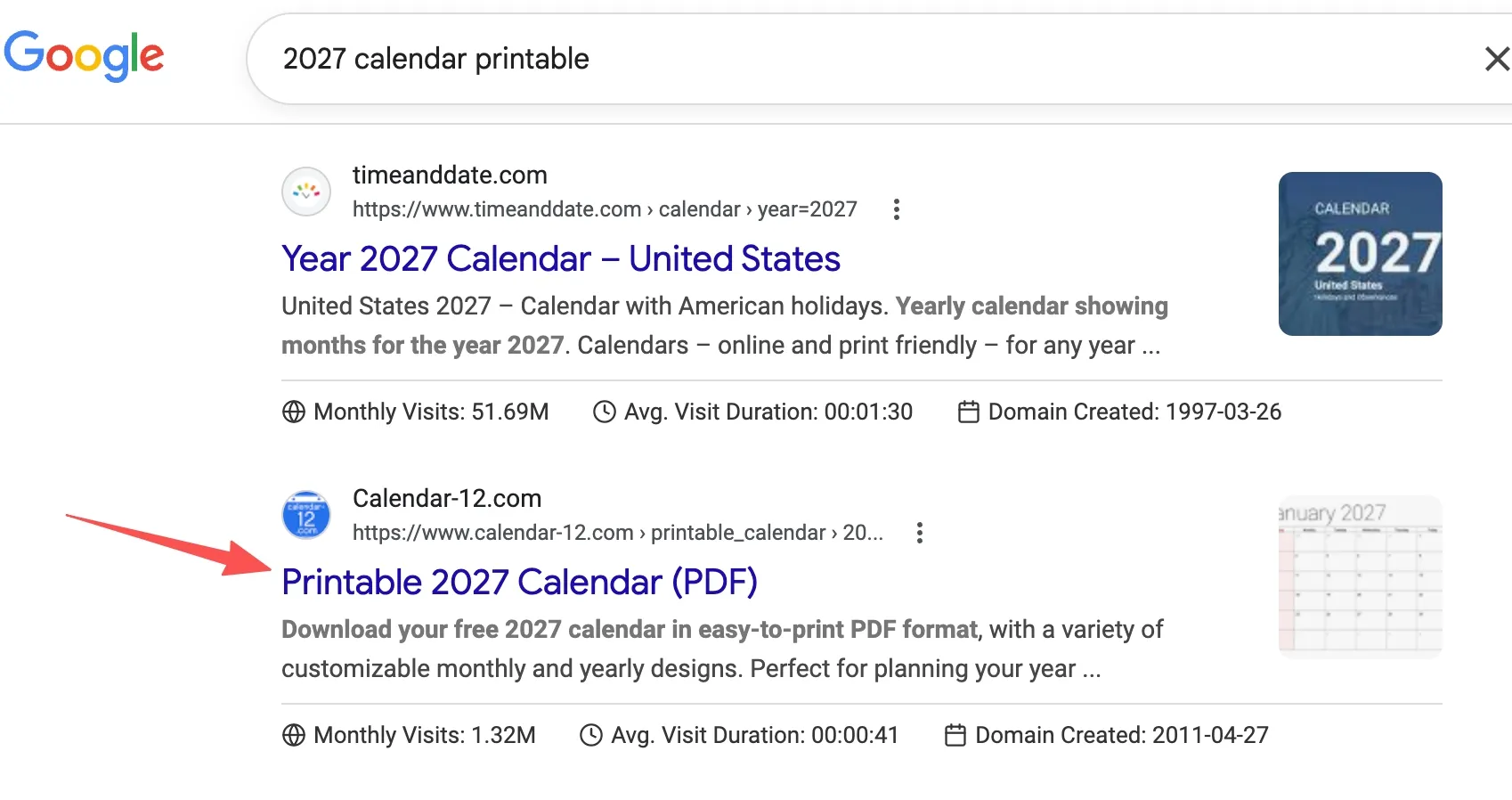
-
2028 calendar printable→ 2028 page also present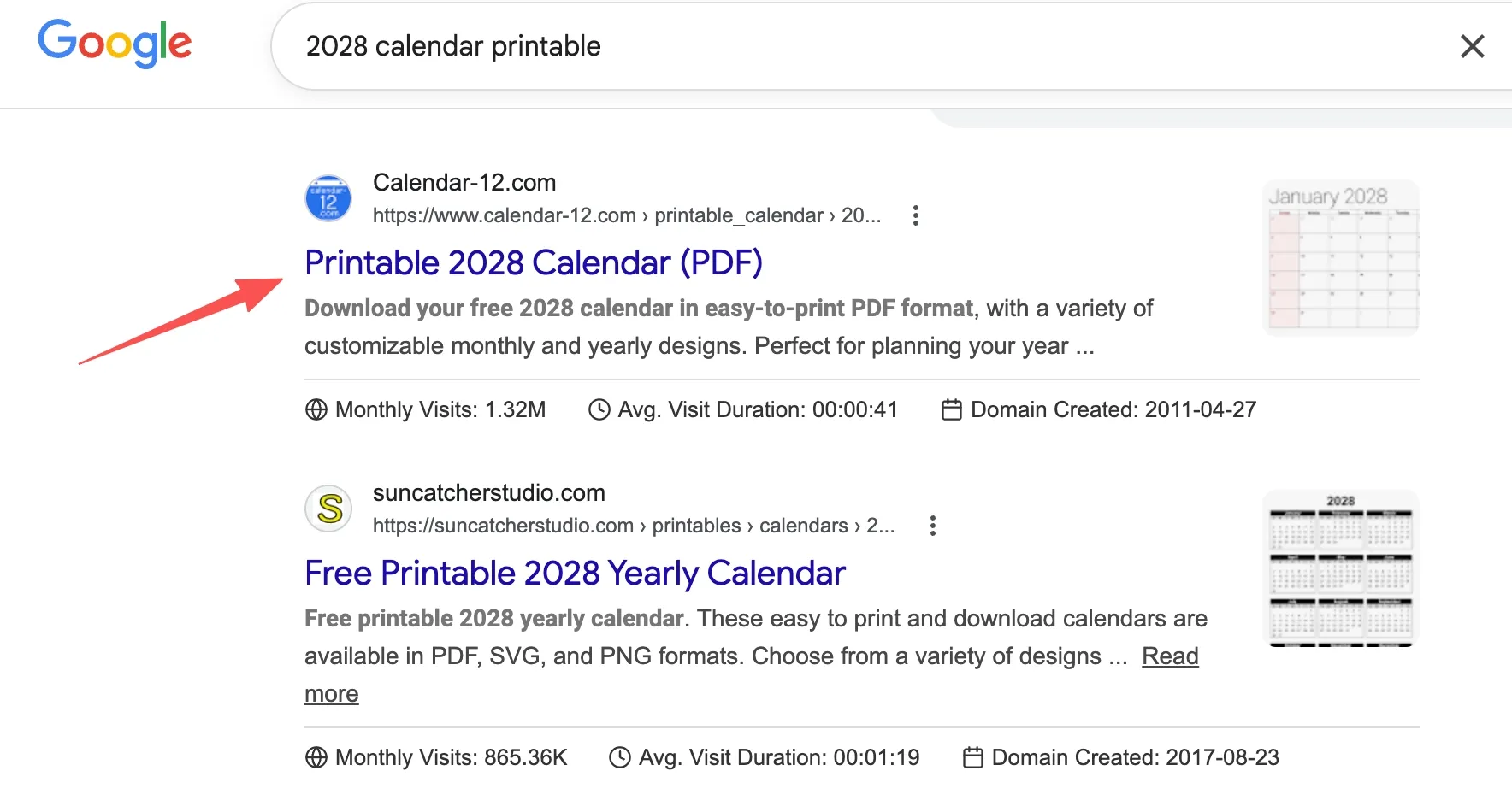
4) Why 2027/2028 pages must be built early
This is the key lesson.
Many teams wait until 2027 to publish a 2027 page. That’s late. Search demand usually appears earlier than expected.
Trend evidence:
-
2026 calendar printablestarted rising during 2025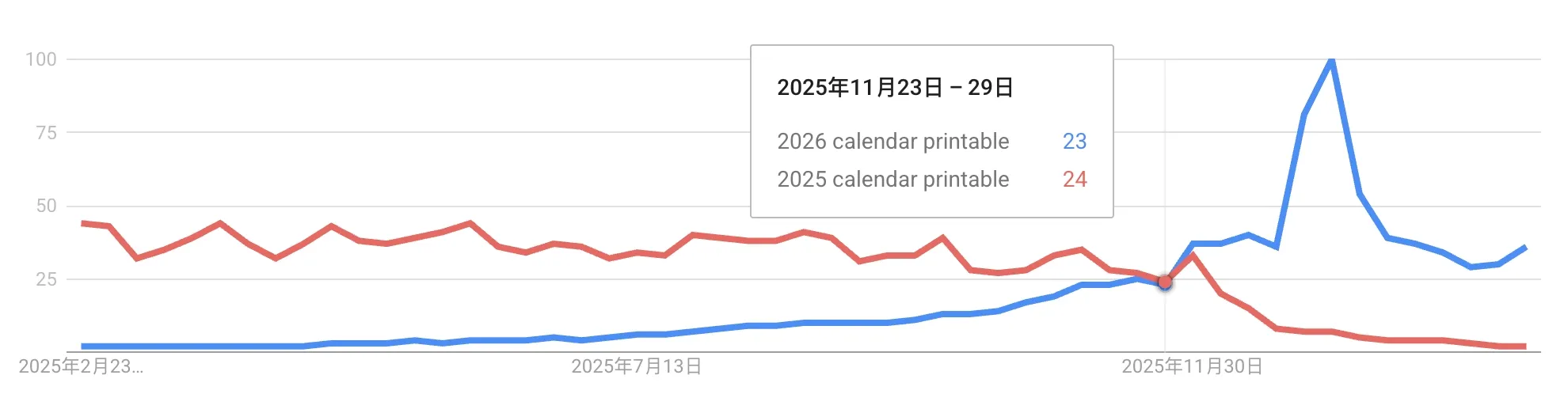
-
2027 calendar printablealready had demand in late 2025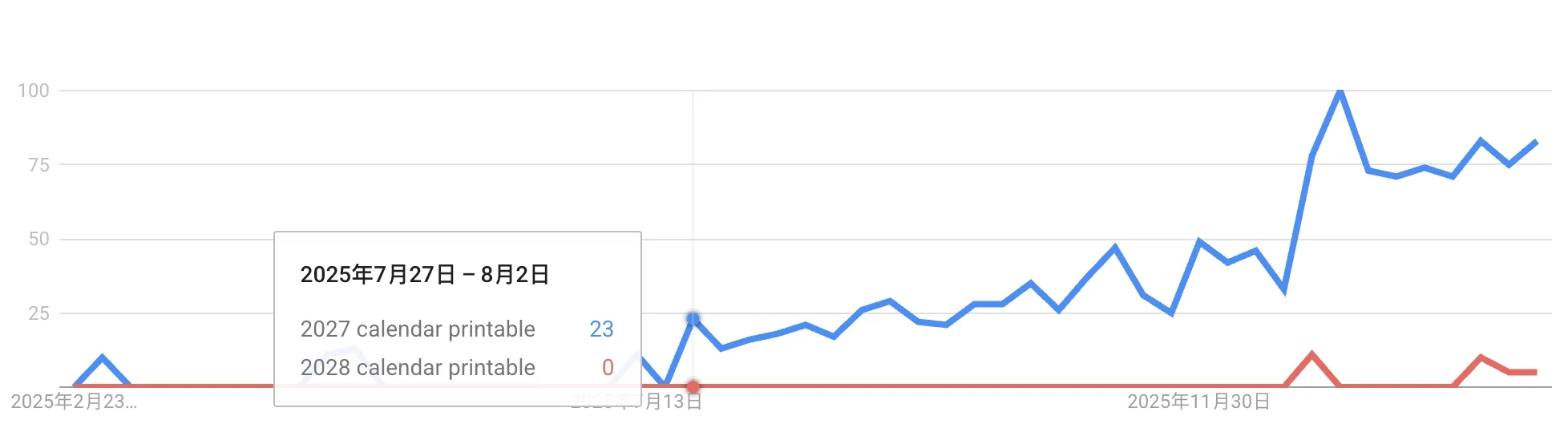
Early publishing gives pages time to accumulate:
- crawl/index history,
- user behavior signals (CTR, dwell, return),
- internal/external link equity,
- trust through stable updates.
5) Practical takeaway: for predictable keywords, timing is the edge
This is not a trick. It’s execution discipline:
- dynamic homepage year for current intent,
- yearly page matrix for long-tail and future intent,
- launch 1–2 years early,
- let user signals accumulate,
- benefit from compounding domain/page authority.
If demand is predictable, publish before demand peaks — not after.
6) Reusable checklist (beyond calendars)
For any predictable, cyclical keyword space:
- Build yearly keyword clusters (head + variants)
- Keep homepage dynamic and yearly pages persistent
- Publish at least 1 year early (ideally 1.5–2 years)
- Refresh content quarterly and strengthen internal links
- Track indexation, rankings, CTR, and engagement
Long-term SEO winners often don’t win by “hacking.”
They win by early positioning + compounding data + consistency.