

beehiiv Hit $2M Monthly Revenue — The Founder's 10 Early-Stage Growth Strategies
Original tweet: https://x.com/denk_tweets/status/2013618810016690461
Chinese tweet: https://x.com/JamesAI/status/2013744874022113399
beehiiv just crossed $2M in monthly revenue. The founder shared 10 early-stage growth strategies.
After reading through them, I compiled and organized the list — every single one is solid.
1/ Start with a Waitlist
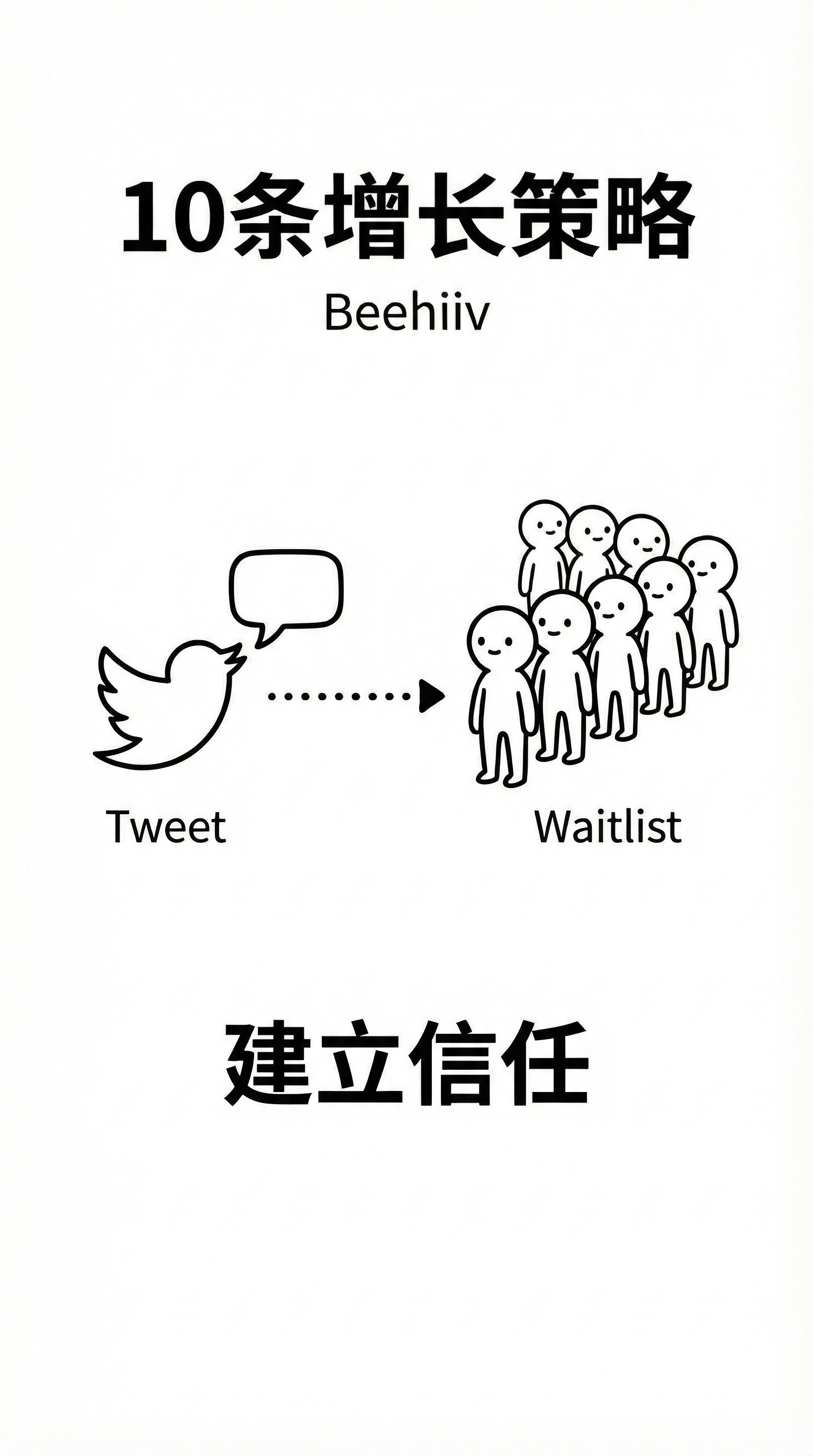
Their first 100 customers came from a single tweet. The goal was simple: build trust while connecting with potential users.
2/ Ship a “Story-Worthy” Feature Every Week
This isn’t about feature bloat — it’s about making the product feel “alive,” sending a signal to users: you can build anything they need, and you will.

3/ Bet on Your Core Differentiator
He previously built the viral referral system at Morning Brew — nearly every newsletter wanted to copy it. When beehiiv launched, they gave it away to every user for free. No competitor did that.

4/ “Unscalable” Is Overrated
Their earliest security system was a Google Form. The founder personally messaged over 20,000 new users. Others saw it as unscalable — he saw it as opportunity.

5/ Don’t Make Users Think
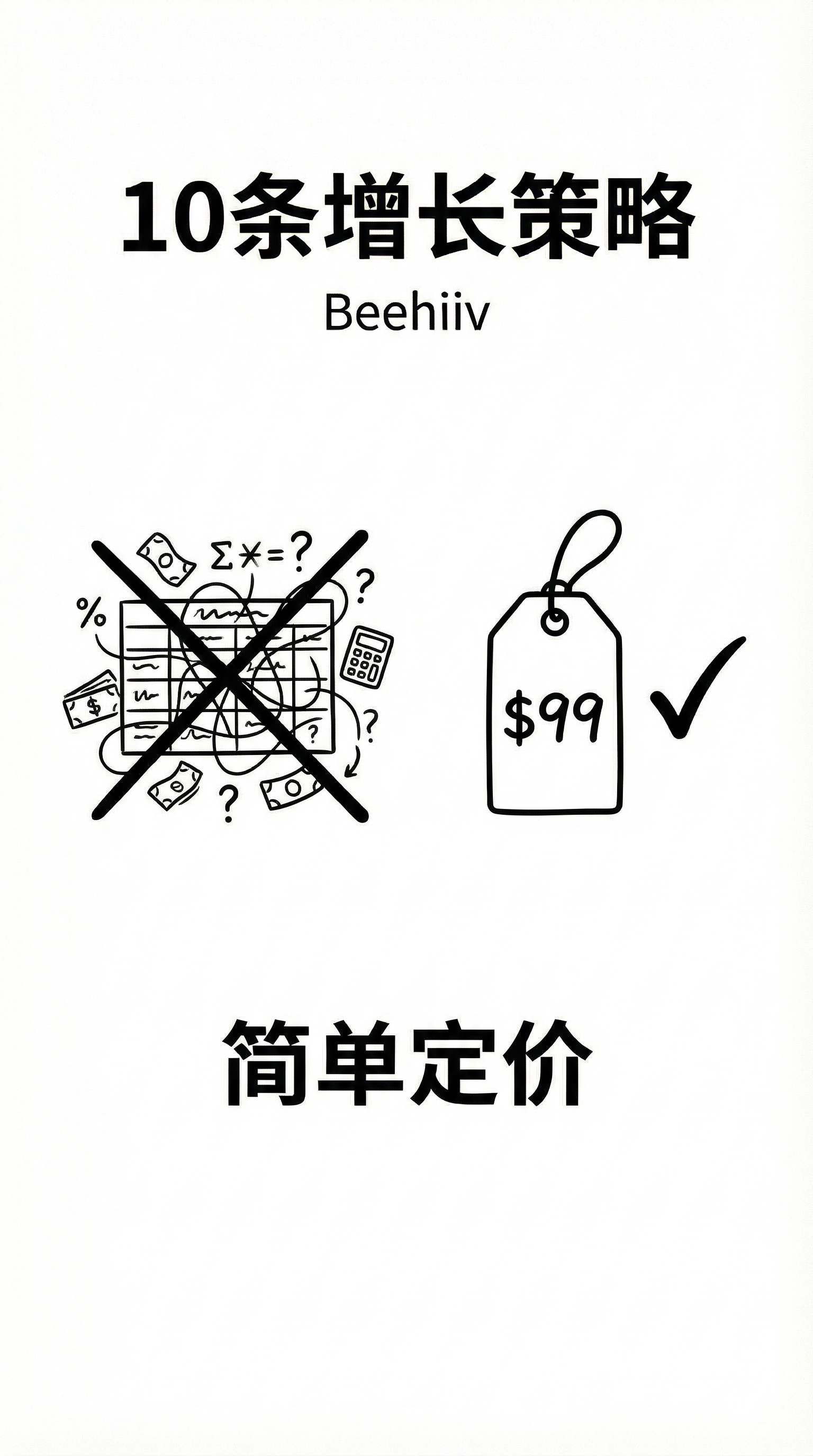
Competitors had complex pricing — charging by list size, by send volume. beehiiv went with one flat price: $99, everything included. Zero friction, explainable in three seconds.
6/ Make Your Product Inherently Viral
Hotmail is the classic Silicon Valley case study. Their version: beehiiv badges in email and website footers, plus shareable dashboards, milestones, and recap reports.

7/ Find Strategic Angel Investors
Most founders chase top-tier VCs. He chased strategic angels who would actually use the product. This gave early social proof and customer case studies.

8/ Everyone Is a Distribution Channel
The entire team was active on social media, with a dedicated Slack channel for sharing posts to promote. The best-performing content? Users sharing their own success stories.

9/ Don’t Ignore LinkedIn
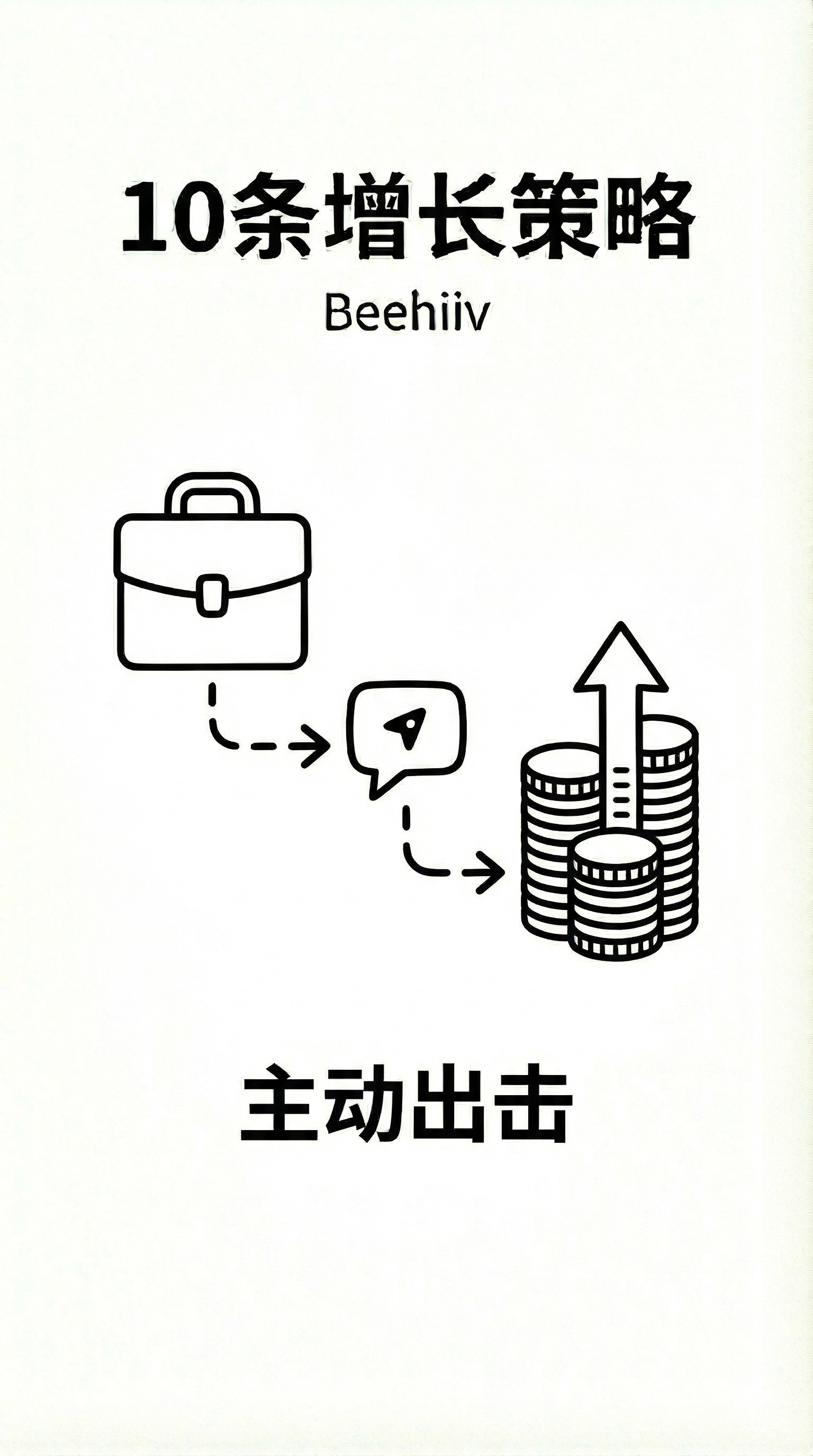
He says it’s the highest-ROI platform for acquiring new business. DM everyone who engages with your content — some go nowhere, some become enterprise clients. This process has now been scaled: export leads to the sales team.
10/ Write Monthly Investor Updates, Even Without Investors
It keeps you accountable, forces you to articulate priorities clearly, and keeps you on people’s radar. He says it’s the highest-leverage thing he does each month.
None of these 10 strategies are new. But in the early stages, execution matters far more than creativity.
If you’re struggling to reach your first $100K, pick one and try it.

Gefei’s Commentary
Here are some expanded thoughts on a few of these strategies:
On Waitlists (Strategy 1)
When the product isn’t fully built yet, start marketing anyway. You need a page to capture the traffic your promotion brings — and a waitlist does exactly that. People who are genuinely interested will leave their email, and when the product launches, you can notify them directly.
Plus, the visitor-to-signup conversion rate tells you a lot: Is the demand real? Is your landing page copy effective?
Years ago, when we were building a travel product, I wrote a waitlist slogan: “Let’s explore the infinite possibilities of travel.” Someone even shared it on Weibo to praise it, and some of those early connections became years-long friends.
On “Story-Worthy Features” (Strategy 2)
Shipping a story-worthy feature every week is really about marketing efficiency. These kinds of features get shared widely, making your promotion efforts go much further.
On “Unscalable” (Strategy 4)
Being scrappy in the beginning is fine. As long as the business can operate, the “dumb” methods might actually become your early moat — because no one else is willing to do them.
On “Don’t Make Users Think” (Strategy 5)
Keep the product simple. Keep the interactions simple. Keep the pricing simple. Don’t make users think — make it easy to start, easy to understand. Especially since many people aren’t great at math, pricing pages need to spell things out explicitly. beehiiv took simplicity to the extreme: one plan, all features included, just pay and go — no plan selection needed.
That said, for AI SaaS products where every API call has a cost, pricing requires more nuance — but that’s a topic for another day.
On “Built-in Virality” (Strategy 6)
When your product has built-in viral mechanics, promotion becomes effortless. Users promote for you without being asked. @LiuXiaoPai’s products are a great example of this done well.
On “Everyone Markets” (Strategy 8)
Having every team member active on social media as a distribution channel works well for small teams — it’s not a corporate playbook.
Having a dedicated account sharing user success stories is incredibly effective for conversion. If you follow my WeChat Official Account, you’ve probably seen this in action — many new community members joined after reading those articles.
On LinkedIn (Strategy 9)
LinkedIn and similar platforms can help you find B2B clients. I don’t have much experience with this personally, but I know friends who have found real paying customers there. It’s particularly well-suited for B2B products.